General information, not legal advice.
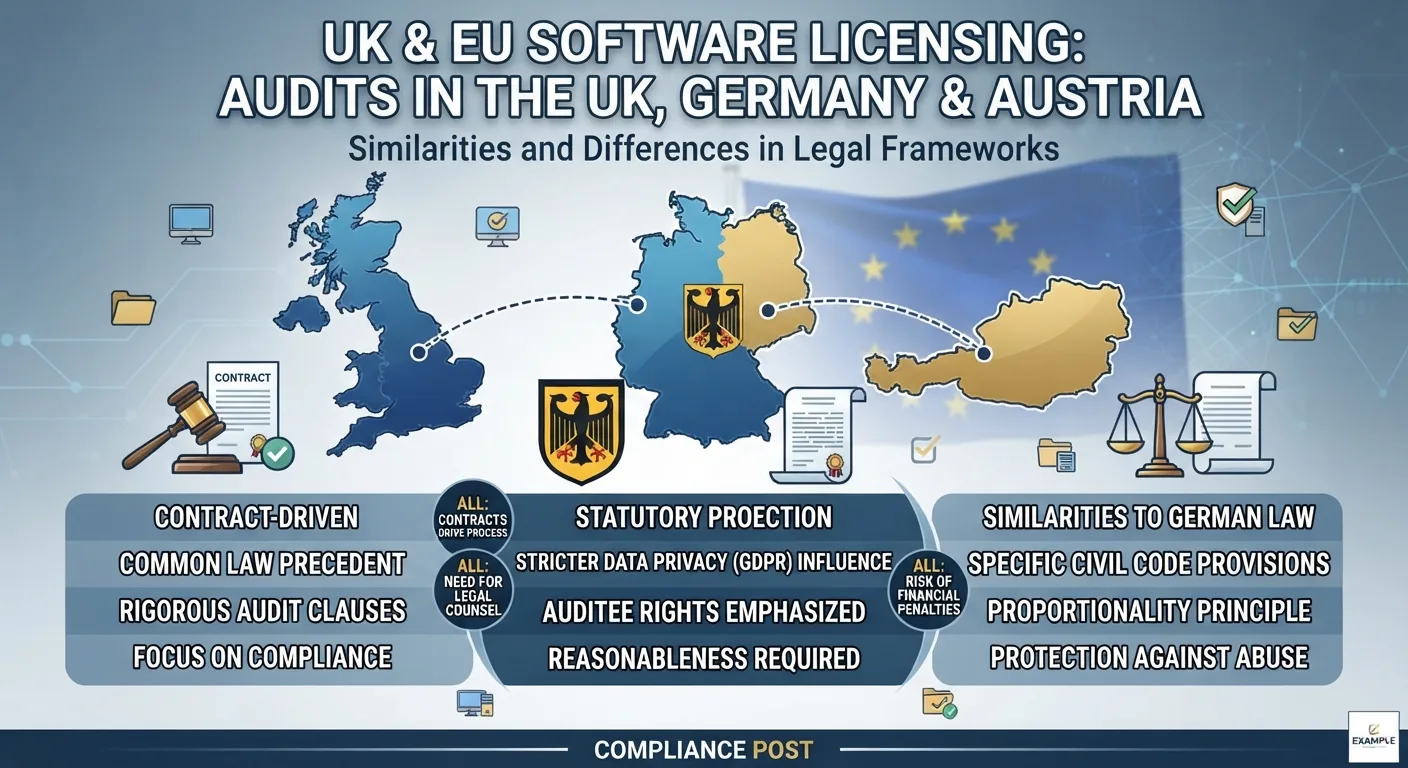
Organisations that operate across borders often ask whether a software audit works differently depending on the country. The short answer is that the licence agreement usually matters most, wherever you are. But the legal framework that sits behind the contract — and the steps available if a matter cannot be resolved — differs between jurisdictions. This article gives a general overview for the UK, Germany and Austria. It deliberately stays at a high level; specific situations always need advice from a qualified lawyer in the relevant country.
The common foundation
Across the UK and the EU, computer programs are protected by copyright as literary works. Within the EU, the rules on the legal protection of computer programs are harmonised by the Software Directive, which each member state has implemented in its national copyright law.
The UK implemented the same principles while it was an EU member state, and they remain part of UK law.
In all three countries, the starting point is therefore the same: using software in a way that the licence does not permit may infringe the rights of the copyright owner. What differs is how audits are typically initiated and how disputes are handled.
The role of the contract
Most audits are carried out under a contractual audit clause. Enterprise agreements and many volume licensing programmes give the vendor the right to verify compliance, typically with a notice period, a limit on frequency and rules on confidentiality. Where such a clause exists, it largely determines the process in every jurisdiction.
Where there is no audit clause — for example, where a vendor has reason to believe that software is being used without any licence at all — the vendor cannot rely on a contract and must rely on the statutory rights available under national law.
United Kingdom
In England and Wales, a vendor's statutory rights flow from the Copyright, Designs and Patents Act 1988. If a matter cannot be settled, a rights holder may bring civil proceedings; remedies a court may consider include an injunction and damages or an account of profits. Courts may also order disclosure of relevant documents as part of the proceedings.
In practice, UK cases are typically preceded by correspondence in line with the court's pre-action expectations, which encourage the parties to exchange information and consider settlement before any claim is issued. Claims must generally be brought within a limitation period, which for most copyright matters is six years.
Proceedings in England and Wales are conducted by solicitors and barristers; specialist lists exist for intellectual property disputes, including a forum designed for lower-value claims.
Germany
German copyright law contains specific provisions for computer programs, implementing the Software Directive. A rights holder may claim injunctive relief and, where there is fault, damages. German law also provides for claims to information about the extent of use and, in certain circumstances, for the inspection of systems to secure evidence.
A distinctive feature of German practice is the formal warning letter (Abmahnung), which invites the recipient to give a declaration that it will refrain from the use in question, usually accompanied by a contractual undertaking to pay an agreed sum if the declaration is later breached. Recipients should take such letters seriously and seek advice before signing anything, because the wording of the declaration matters.
Austria
Austrian copyright law likewise contains specific rules for computer programs. Remedies include injunctive relief, a claim to reasonable remuneration for unlicensed use and, where there is fault, damages. As in Germany, there are rights to information that can help establish the extent of use.
Out-of-court resolution is common, and many matters are settled once the parties have compared the licences held with actual use.
What this means in practice
For most organisations, three practical points stand out:
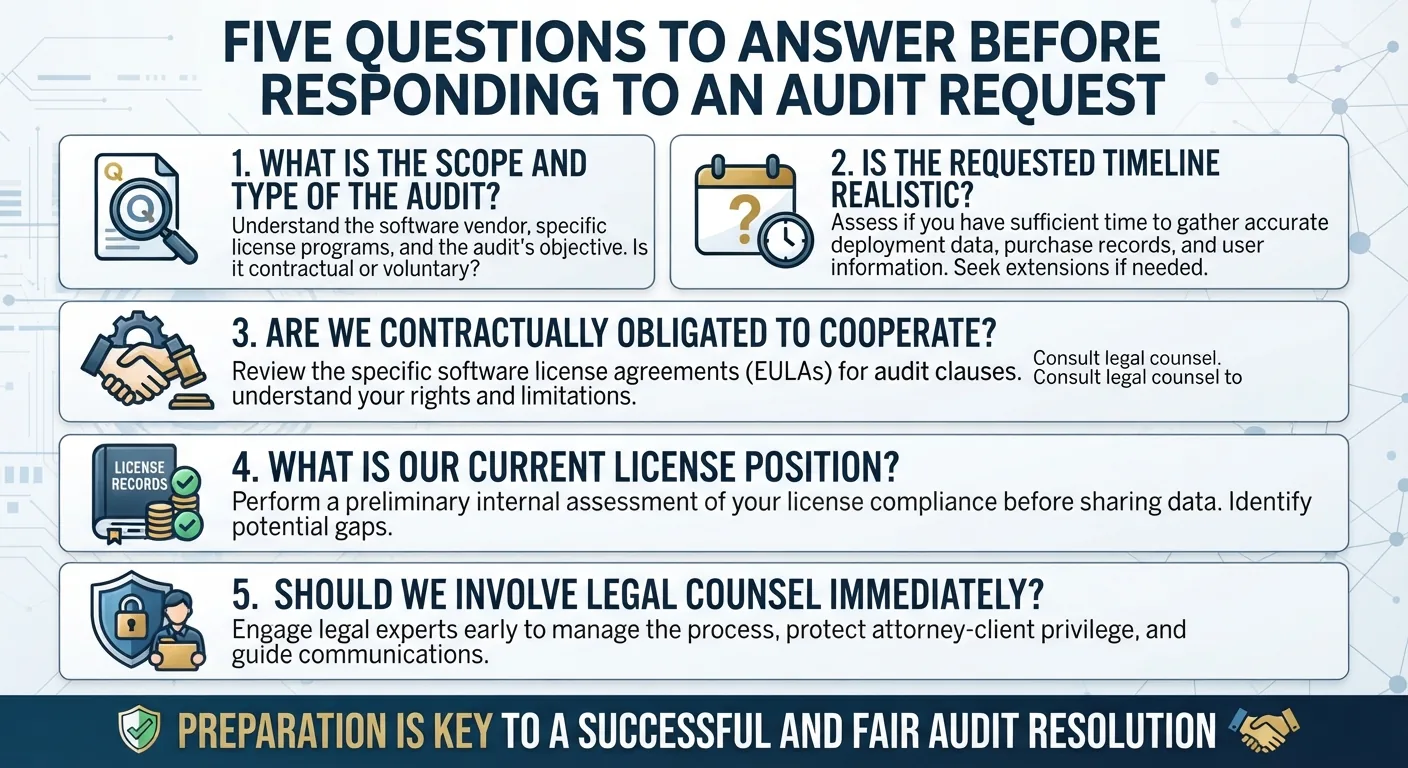
- Read your agreements first. The contractual audit clause usually defines the process, whatever the jurisdiction.
- Keep good records everywhere. Proof of purchase and accurate deployment data resolve most questions quickly, in any country.
- Engage early. In all three jurisdictions, the legal systems favour parties who exchange information and attempt to settle before turning to the courts.
At LaiLegalCompliance we aim to resolve every matter commercially. Where that is not possible, our partner solicitors and local counsel in each jurisdiction conduct any further steps. LaiLegalCompliance Ltd is not a firm of solicitors. Court proceedings are conducted by our partner solicitors.
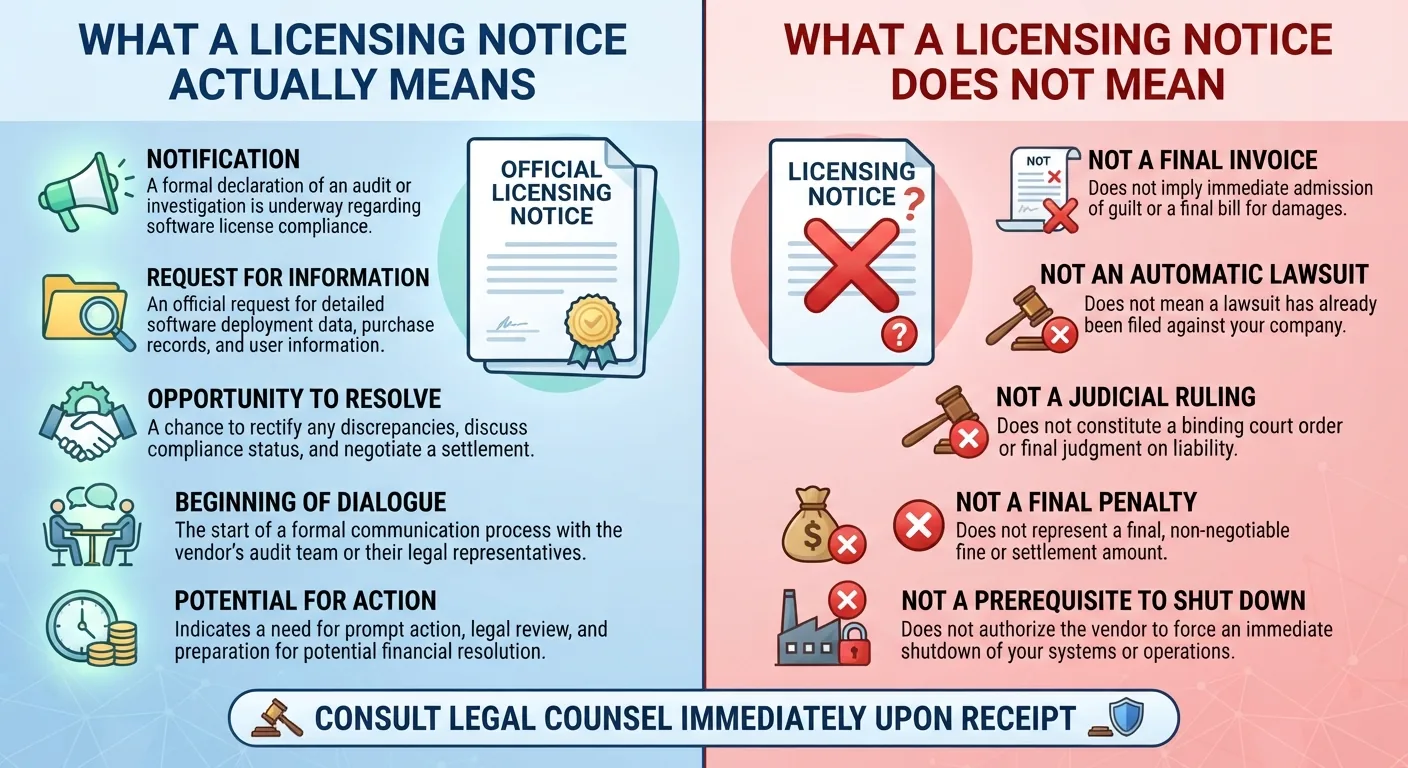
If you have received a notice from us, our guide for recipients explains how to respond.